
Online Quran classes for adults in the UK: where to begin
Describe your starting point in ordinary language. If the Arabic alphabet is unfamiliar, ask for first-letter teaching; if you can already read, bring a short sample. There is no need to pretend to know technical terminology before asking for help.
Learning Quran online as an adult after a long break
Familiar surahs may be easier to recite than new text. Ask the tutor to check both so remembered material does not conceal a reading gap. A responsible recommendation can build on retained skills without requiring an automatic restart.
Fitting lessons around work and family
Send a preferred UK-time window and a practical alternative. Explain changing work patterns before committing to a plan, and agree how timetable changes are handled. Flexible teaching does not by itself define refunds, credits or unlimited rescheduling.
Reading, Tajweed, Hifz or understanding?
Choose the immediate problem first. Qaida addresses decoding, guided reading develops accuracy and fluency, Hifz requires a sustainable revision routine, and Arabic or Tafseer supports understanding in different ways. The tutor can recommend a sequence rather than asking you to study everything at once.
Judging the teacher’s feedback
Ask for a clear model, an opportunity to try again and an explanation of the home task. A tutor who listens carefully and makes a correction understandable is more useful than a promise of instant fluency. Review the goal as your reading becomes more secure.
Private Quran lessons for adults: explain the skill you need
An adult enquiry can begin in ordinary language: recognising Arabic letters, reading a new line, correcting a recurring sound or returning to study after years away. Describe what is comfortable and what requires help. The tutor can then choose a suitable sample instead of inferring a level from age or the course you selected on a website. If reading aloud feels embarrassing, explain that before the trial and ask for a manageable first exchange. A practical correction and a clear next step are more useful than an uncomfortable attempt to appear further advanced.
Learning Quran online around a working week
Choose a routine from the week you normally have, including work, care responsibilities and the time needed to settle into the lesson. Separate a preferred window from an appointment the academy has confirmed. Ask how a missed or changed session is handled before paying, particularly if your work shifts vary. Home practice can focus on a small exercise already demonstrated by the teacher. If the task repeatedly feels unmanageable, describe the obstacle and review the plan rather than letting uncertainty accumulate until you abandon the course.
Explore a suitable course

Beginner
Noorani Qaida
Start with the Arabic alphabet, vowel sounds and joined words in a one-to-one lesson. Noorani Qaida is a foundation course for learners who cannot yet decode Quranic text reliably, including children, adults and new Muslims.
Explore the course →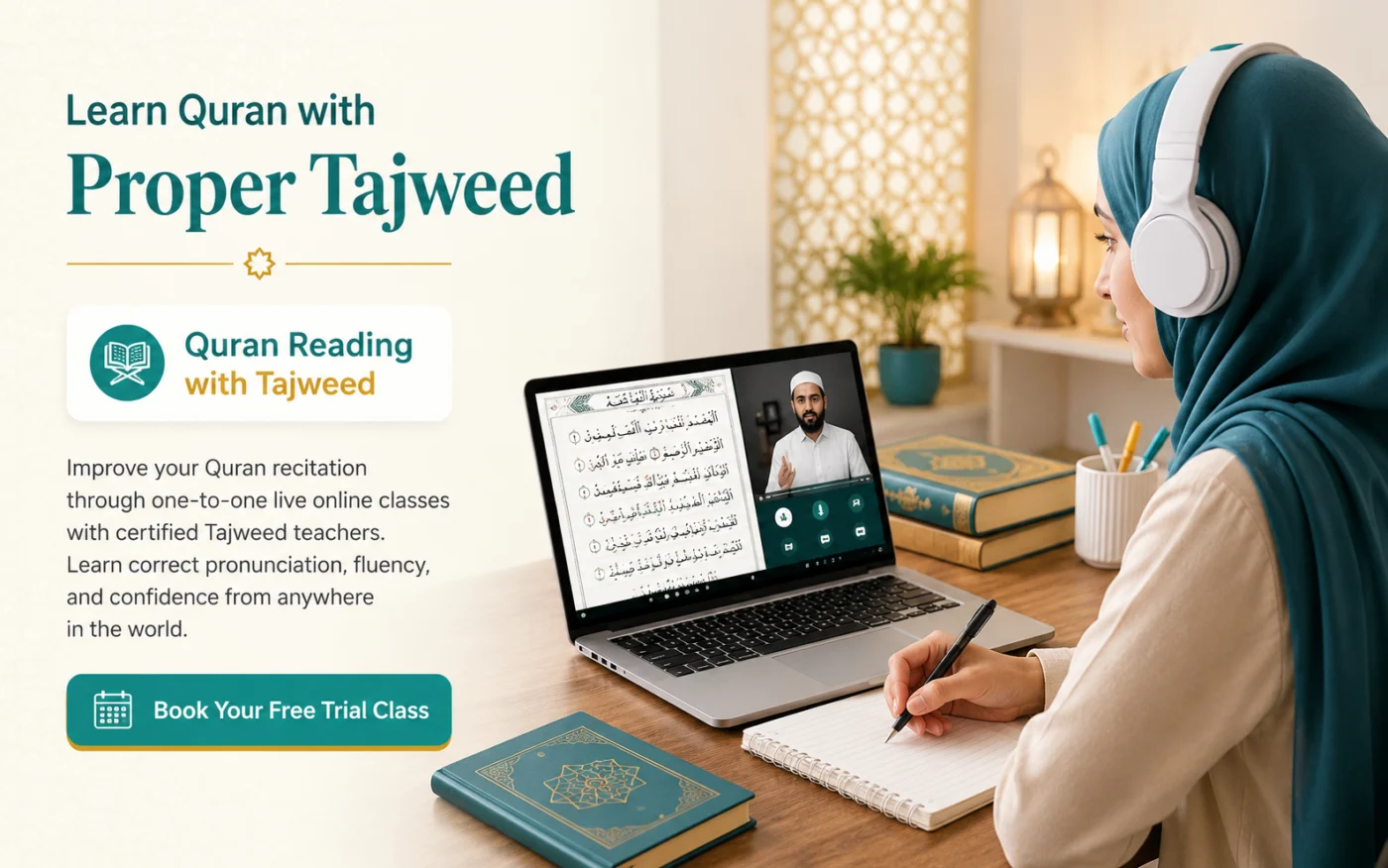
Foundation to intermediate
Quran Reading with Tajweed
Develop reading fluency while a tutor listens and helps correct recitation. This course suits learners with a basic reading foundation who need guided practice with pronunciation and the appropriate application of Tajweed.
Explore the course →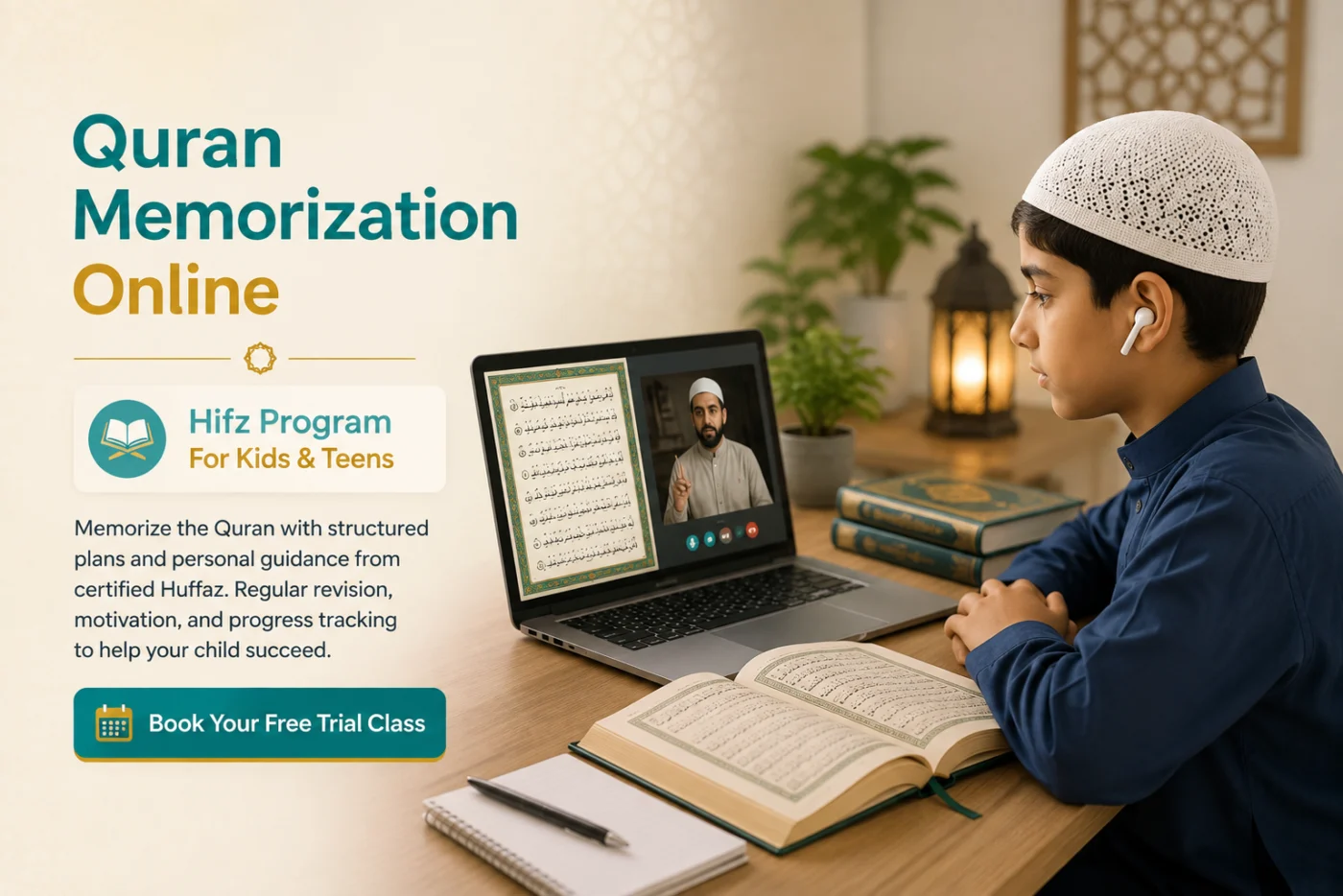
Reading foundation required
Quran Memorisation (Hifz)
Build memorisation around accurate recitation and a revision routine you can maintain. The first assessment should consider current reading, retained passages and realistic practice time alongside school, work or family responsibilities.
Explore the course →
Guided understanding
Tafseer-ul-Quran
Explore the meaning and context of Quranic verses through guided study. Tell the tutor your reading background, preferred teaching language and whether you need an introductory explanation or a more structured sequence of study.
Explore the course →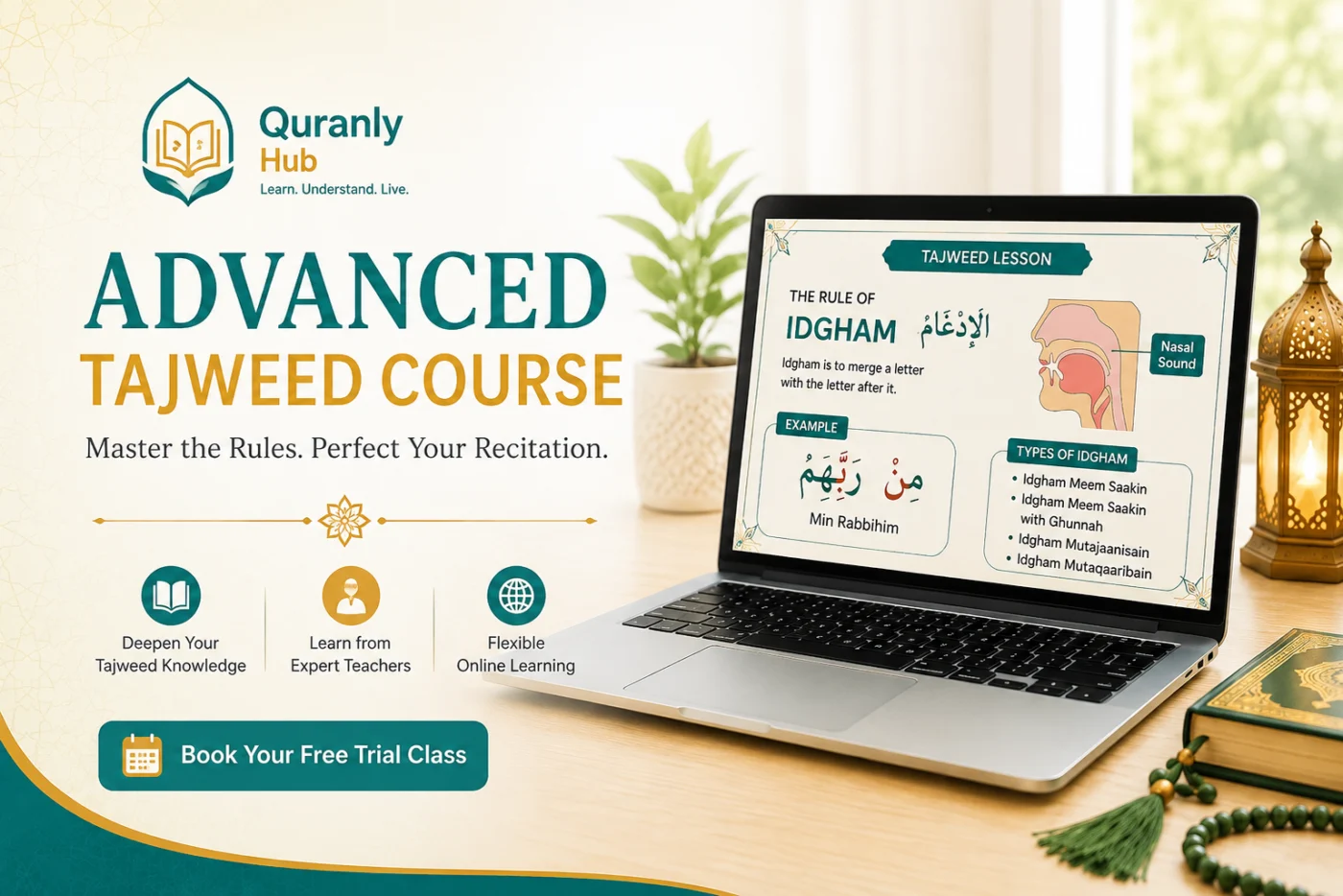
Advanced
Advanced Tajweed
Refine the details of recitation after establishing a reliable reading foundation. A trial should check whether advanced work is appropriate and identify which articulation points, letter qualities or rules need the most attention.
Explore the course →
Beginner upwards
Quranic Arabic
Study vocabulary, grammar and sentence structure encountered in the Quran. This language-focused course complements recitation; it should not be confused with a first-letter Qaida course or a complete Tafseer programme.
Explore the course →Published fees and a clear next step
A free trial does not require payment or a credit card. Standard published plans are USD 30 for eight or USD 40 for sixteen 30-minute lessons per month, with separate Tafseer fees. Confirm the actual course, teacher and recurring UK-time slot before choosing a plan.
View fees and payment questions · Find your UK city · What to ask in the trial
Questions before you book
Am I too old to learn the Quran?
Adults can start at their current level. The first step depends on reading experience and the time available for regular practice, not a maximum starting age.
Can adult lessons be private?
The service described is live and one-to-one. Explain any tutor preference when booking and confirm the specific arrangement with the academy.
Can lessons be booked in UK evening time?
You can request evening or weekend windows. A teacher and recurring slot need to be confirmed before the timetable is treated as booked.
Discuss a suitable free trial
Tell us the learner’s level, preferred UK-time windows and any teacher preference. We will confirm availability and the appropriate course before you choose a plan.