
Online Quran classes for beginners: assess your starting level
You do not need a formal level label. Describe whether you recognise letters, follow vowel signs or read connected text. A teacher can then choose a short exercise and listen to how you approach it, instead of guessing from your age or the name of a book.
Learn Noorani Qaida online before connected Quran reading
Qaida introduces the reading foundations needed before independent Quran reading. Letter recognition, sounds, vowel marks and joining are practised in a suitable order. The pace should follow secure reading, not a promised number of pages per week.
Moving from letters to connected reading
A learner should be able to apply a skill in another example before relying on it in a longer passage. Ask how the tutor checks transfer, and tell them when a word is being recalled from memory rather than decoded from the page.
Building pronunciation into early lessons
Corrective feedback should begin with the exercise being taught. Ask the teacher to model a sound and let you repeat it. Avoid trying to learn a large list of advanced Tajweed labels before you can hear and apply the relevant distinction.
A workable beginner practice routine
Agree one short task, use the teacher’s model and write down questions for the next lesson. Beginners do not need a large independent workload to demonstrate commitment. A calm, repeated exercise is preferable to rushed reading that reinforces an error.
Beginner Quran reading: from recognition to an independent attempt
A helpful progression connects the visible letter with a sound, introduces the signs being taught and then places the skill inside an appropriate connected example. The teacher should select the sequence from the assessment. Ask how a learner's recognition will be checked when examples appear in a different order. Being able to follow a repeated model is a useful beginning, but independent application needs its own check. If the learner confuses two forms or sounds, a smaller focused exercise may be more effective than repeating a whole page without understanding the distinction.
What beginner progress can look like before fluent reading
Early progress may mean recognising a form with fewer prompts, producing a modelled sound more clearly or reading a short joined word accurately. Ask the tutor to show the improvement in a suitable example and explain the next task. Do not compare a beginner's page count with another learner who started with different skills. Adults and children can both need first-letter work, while a returning learner may retain several foundations. Review actual reading and comfort with the explanation before treating a completed book or named level as proof that the next stage is appropriate.
Explore a suitable course

Beginner
Noorani Qaida
Start with the Arabic alphabet, vowel sounds and joined words in a one-to-one lesson. Noorani Qaida is a foundation course for learners who cannot yet decode Quranic text reliably, including children, adults and new Muslims.
Explore the course →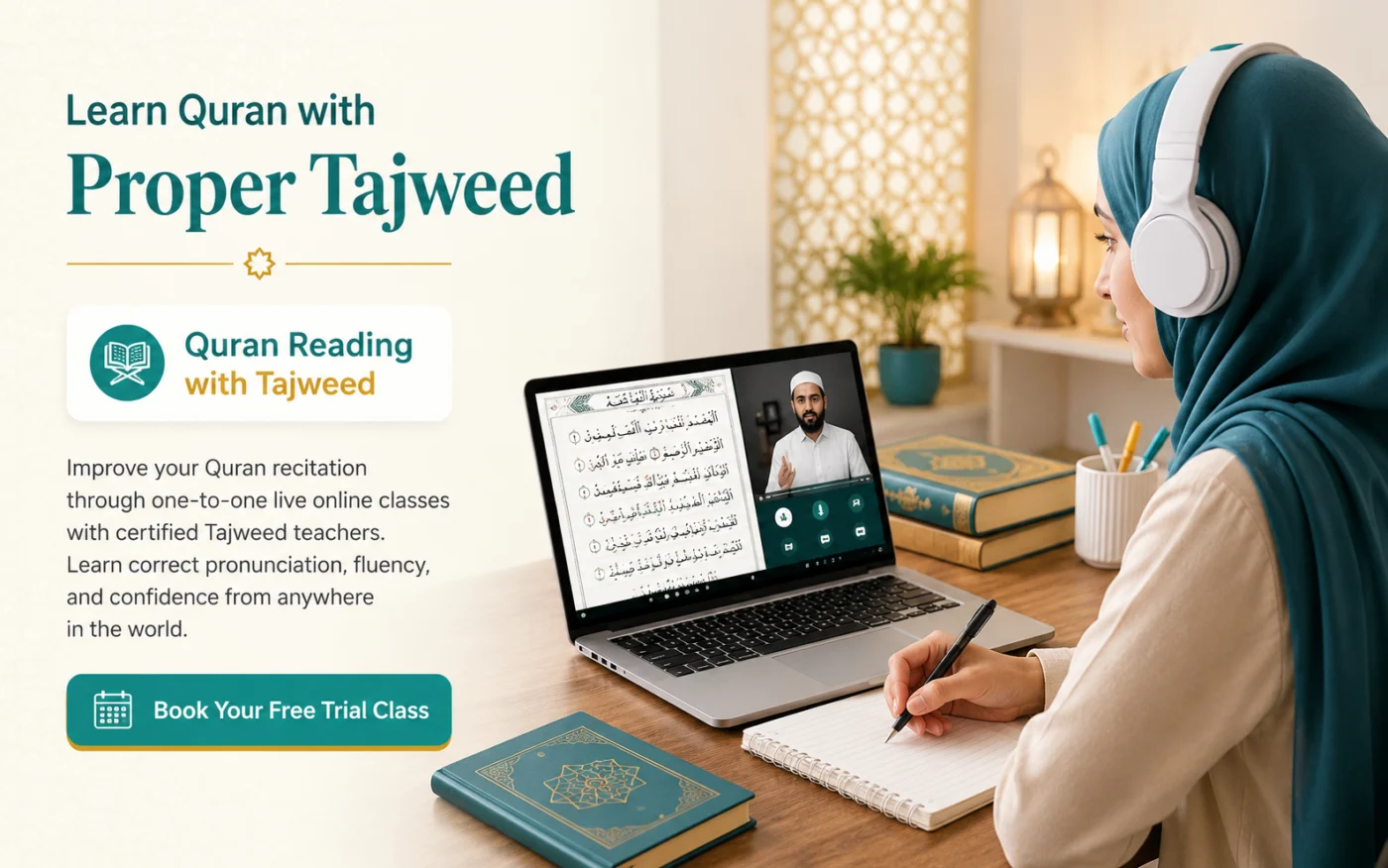
Foundation to intermediate
Quran Reading with Tajweed
Develop reading fluency while a tutor listens and helps correct recitation. This course suits learners with a basic reading foundation who need guided practice with pronunciation and the appropriate application of Tajweed.
Explore the course →
Reading foundation required
Quran Memorisation (Hifz)
Build memorisation around accurate recitation and a revision routine you can maintain. The first assessment should consider current reading, retained passages and realistic practice time alongside school, work or family responsibilities.
Explore the course →
Guided understanding
Tafseer-ul-Quran
Explore the meaning and context of Quranic verses through guided study. Tell the tutor your reading background, preferred teaching language and whether you need an introductory explanation or a more structured sequence of study.
Explore the course →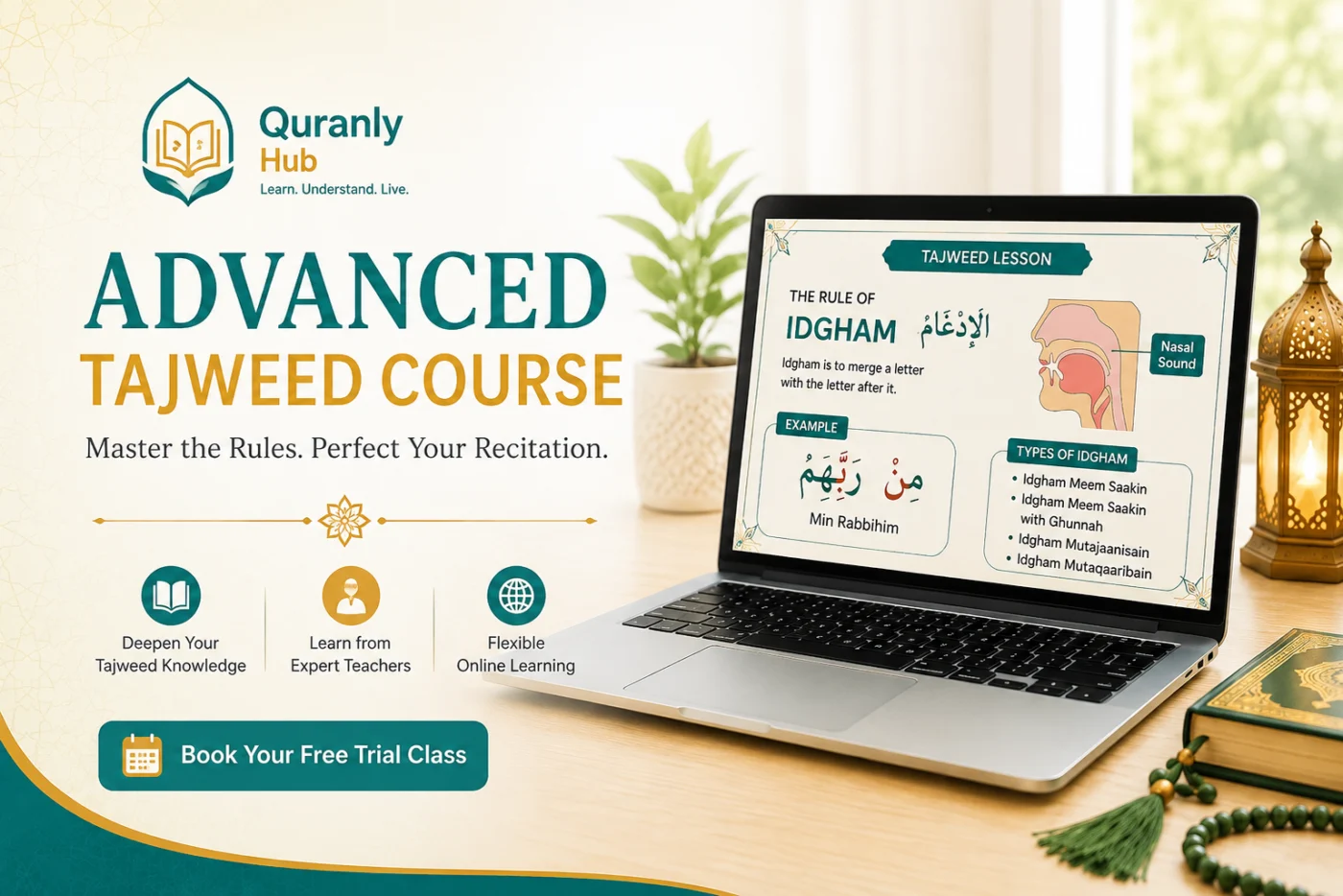
Advanced
Advanced Tajweed
Refine the details of recitation after establishing a reliable reading foundation. A trial should check whether advanced work is appropriate and identify which articulation points, letter qualities or rules need the most attention.
Explore the course →
Beginner upwards
Quranic Arabic
Study vocabulary, grammar and sentence structure encountered in the Quran. This language-focused course complements recitation; it should not be confused with a first-letter Qaida course or a complete Tafseer programme.
Explore the course →Published fees and a clear next step
A free trial does not require payment or a credit card. Standard published plans are USD 30 for eight or USD 40 for sixteen 30-minute lessons per month, with separate Tafseer fees. Confirm the actual course, teacher and recurring UK-time slot before choosing a plan.
View fees and payment questions · Find your UK city · What to ask in the trial
Questions before you book
Do I need Arabic before starting?
No. Explain that you are a complete beginner, and the tutor can assess letter recognition and suggest an appropriate first reading exercise.
How long does Noorani Qaida take?
It varies with starting skills, practice, lesson frequency and individual learning needs. A completion date should not be guaranteed before assessment.
Is Quranic Arabic the same as learning to read the Quran?
No. Qaida and reading focus on decoding and recitation; Quranic Arabic studies vocabulary and language structure. The tutor can explain which need should be addressed first.
Discuss a suitable free trial
Tell us the learner’s level, preferred UK-time windows and any teacher preference. We will confirm availability and the appropriate course before you choose a plan.